One Stage or Several Small Rooms? Choosing a Programme Shape
Choosing a festival programme shape helps match audience choice, schedule overlap and room capacity to the kind of attention each event needs.
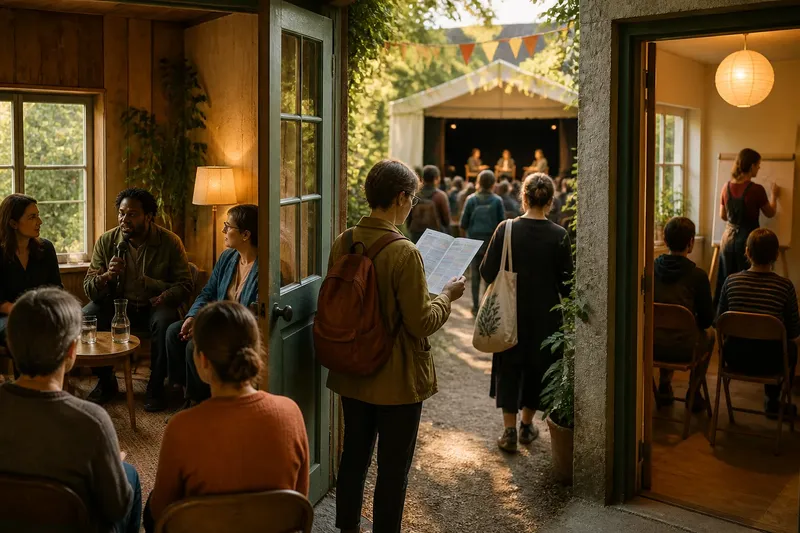
A festival programme shape decides whether audiences share one sequence or choose between simultaneous events. Choosing a festival programme shape is therefore not just a matter of finding enough rooms: it affects who can attend each item, how much attention performers receive and whether people feel they have missed something important.
A single stage gives the programme a common rhythm, while several smaller spaces create choice and intimacy. Either can work well, but each creates predictable problems when the audience, timetable and nature of the events do not fit the format. Treat those problems as design signals, not as reasons to add more sessions by default.
When one stage feels crowded
A single-stage programme can draw more people than the room can comfortably hold, especially when a popular event sits between less familiar ones. The cause may be a mismatch between the event’s appeal and the venue’s usable capacity, rather than a failure to publicise the rest of the programme.
Try looking at expected demand by event, not just the total audience forecast. If a session is likely to attract people who would otherwise attend different parts of the programme, consider a larger room, a repeat performance or a format that can accommodate more people without compromising visibility or sound. Do not solve crowding by quietly allowing extra standing room unless the venue permits it and the arrangement remains safe.
Say a festival expects a lively discussion to draw a larger crowd than the next available hall can seat. The organisers could move it to a room with a suitable layout and make the change clear on the programme; the expected result is fewer people arriving to find they cannot enter, while the following event retains its own space.
A shared stage also gives each event the same audience, which can make a programme feel cohesive. Yet that shared audience may include people who would choose differently if given a choice, so watch for a pattern of early departures or a quiet room after a strong opening. A brief, welcoming transition can help people settle, but it cannot make an unsuitable sequence compelling.
When several rooms compete
Multiple small spaces can feel lively until two events that appeal to the same people run at once. This is schedule overlap: sessions compete for attention because they are attractive to similar audiences, require the same contributors or serve as alternative ways to engage with one subject.
The problem is not simply that events happen at the same time. Parallel sessions can be useful when they suit distinct interests or different modes of participation. Trouble arises when a visitor must choose between two items they reasonably expected to attend, such as a conversation and a related workshop that share a central speaker.
Try comparing the likely audience and the people essential to each event before fixing the timetable. Move one item, repeat it at another time or make a deliberate pairing only if the two sessions truly complement each other. If a performer or facilitator is needed in both rooms, the overlap is not a programme choice; it is a scheduling conflict.
When a session has limited places, give visitors a clear indication of how entry works. A smaller room may create a more engaged gathering, but it can also leave people disappointed if they cross the site only to find that the room is full. A visible booking or admission arrangement is more useful than vague wording that implies everyone can attend.
When choice becomes tiring
Several simultaneous options can turn a festival visit into a series of difficult decisions. This tends to happen when the programme offers many appealing events in each time slot, uses descriptions that make them sound interchangeable or gives visitors no sense of what they will experience in each space.
Try to distinguish sessions by their purpose and feel. A talk, a participatory workshop and a performance may share a broad theme but ask different things of an audience. State those differences plainly, and avoid creating parallel events that duplicate one another unless the duplication is intentional, such as repeating a popular activity for people who could not attend earlier.
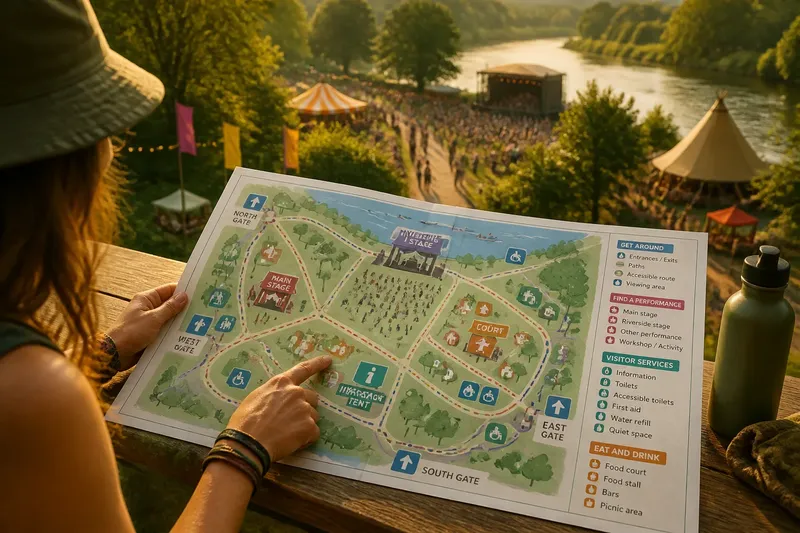
Choice is easier when visitors can see the shape of a visit rather than only a list of events. Use clear start and finish times, allow realistic time to move between rooms, and make breaks visible. If people need to cross a courtyard or pass through a busy entrance, a tight changeover can make two theoretically separate sessions impossible to attend in succession.
Consider the experience of someone who wants a full afternoon without making every decision in advance. A programme with a few recognisable strands, clear descriptions and breathing space between sessions lets that visitor choose freely without treating the timetable as a puzzle.
When intimate rooms feel exposed
Small spaces invite close attention, but they can make a session feel uncomfortable if the layout, sound or audience relationship is wrong. A discussion may benefit from a circle of chairs, while a performance may need a clear sightline and a boundary between performers and visitors. The room should support the activity rather than merely contain it.
Try matching the format to the kind of attention the event needs. A quiet reading or careful conversation may work well in a small room where people can hear one another. A movement-based performance, a noisy demonstration or an event with frequent arrivals may need more space or a different arrangement.
Before confirming a room, consider access, circulation, seating, acoustics and the way people enter and leave. A narrow doorway or a layout that blocks an accessible route can undermine an otherwise thoughtful programme. Where the right arrangement depends on venue rules, equipment instructions or local requirements, check those before announcing the session.
Small rooms also increase the pressure on facilitators to manage attention. A clear welcome, an explanation of participation and a gentle way to handle late arrivals can help the group focus. Avoid promising intimacy as a feature if the room is likely to be noisy or if people will be continually passing through.
When a shared stage feels flat
A single-stage line-up can lose energy if every event asks the audience to sit in the same way and attend in the same manner. A sequence of talks, for example, may be coherent on paper yet demanding for visitors who need a change of pace or a chance to participate.
Try varying the form while keeping the programme’s central thread. A short performance followed by a conversation, or a demonstration placed between discussion sessions, can invite different kinds of attention without splitting the audience. The change should serve the content, not exist simply to make the timetable look varied.
Transitions matter as well. If the next event requires a stage reset, microphone change or rearrangement of chairs, allow time for it rather than asking the audience to wait through an uncertain pause. A host can explain what is happening, but a clear programme design is better than relying on improvisation to cover repeated delays.
Which programme shape fits?
Use these questions to identify the format that suits the programme’s actual demands.
When is one stage the better choice?
Choose one stage when the events share an audience, benefit from a common sequence or depend on a collective atmosphere. It can also be the clearer option when visitors have limited time or when the site makes movement between rooms difficult.
When do several rooms work better?
Several rooms suit programmes with genuinely different interests, formats or levels of participation. They are most useful when visitors can reach them easily and the timetable gives them a fair chance to choose without sacrificing related sessions.
How much overlap is too much?
Overlap becomes a problem when the same audience, contributor or essential resource is needed in two places at once. Review the timetable from the perspective of a visitor who wants to attend related events, then check that the people delivering them can move between sessions as planned.
What if the audience size is uncertain?
Keep the plan flexible where possible: use a room that can be arranged for a smaller or larger gathering, repeat an event if the team and venue can support it, or make entry arrangements clear. Uncertainty is a reason to prepare a sensible option, not to imply that every visitor will be admitted.
Make the choice serve attention
Choosing a festival programme shape starts with the attention each event asks for. A shared stage can help people experience a sequence together; separate rooms can let them follow distinct interests. The better fit is the one that makes those experiences possible without asking visitors to be in two places, wait through avoidable changeovers or guess how a room works.
Before publishing, read the timetable as both an organiser and a visitor. Check where audiences may collide, where movement takes time and which sessions need quiet, participation or a shared focus. If each item has a clear reason for being on one stage or in its own room, the programme gives people meaningful choice rather than choice for its own sake.